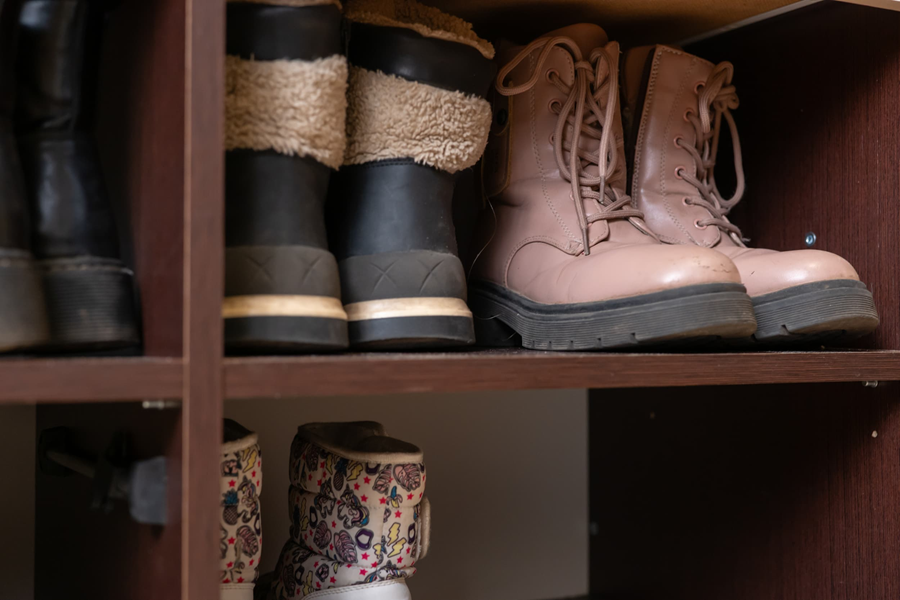
When the colder months arrive, many of us rely on sturdy, comfortable winter shoes to keep us warm, dry and safe in wet or icy conditions. But once spring comes around, those well-loved wellies and cosy boots are often cast aside without much thought. Proper storage, however, can make a real difference.
At Chums, we understand how important reliable, comfortable shoes are – especially when navigating wet, icy or uneven ground. In this guide, we share simple, practical advice on how to store your winter shoes to keep them in good condition for many seasons to come.
Storing winter shoes without proper care can lead to a range of problems that shorten their lifespan and affect how comfortable they feel to wear when the cold weather returns. One of the most common issues is misshaping. Boots and sturdy shoes often lose their structure if they’re left slumped in a cupboard, causing creasing, sagging or folded ankles that can be difficult to fix.
Moisture is another concern. If shoes are put away while still damp from rain, snow or everyday wear, they can quickly develop unpleasant odours or even mould. This not only damages the materials but can also present a health hazard by introducing mould to your home.
Leather and suede can be particularly vulnerable to damage. Without proper cleaning and conditioning, these natural materials can dry out, crack or fade over the summer months. Dirt and salt left on the surface can also stain permanently.
Finally, poor storage can simply mean shoes get lost, crushed or forgotten. Taking a little extra care now helps to keep your cold-weather footwear in great condition, ready for next winter.
Below, we’ve collated a step-by-step guide to help you store your winter shoes in the best possible way. Whether you have a large collection or just a few favourites, these easy steps will help you to keep your footwear protected, organised and ready for next year.
Making sure your winter shoes are completely clean and dry before storing them is one of the most effective ways to keep them in excellent condition. Dirt, mud and road salt can cling to the surface and, if left untreated, may stain materials or cause discolouration that’s difficult to remove later. Moisture trapped in the fabric or lining can slowly weaken stitching, encourage cracking in leather or suede, and leave the shoes feeling stiff or misshapen when you next wear them.
As mentioned earlier, damp footwear is also far more likely to develop mould or unpleasant odours during the warmer months, especially if stored in enclosed spaces. Taking a little time to brush off debris, spot-clean marks and allow your shoes to air-dry fully before storing them away helps to protect their structure, comfort and longevity.
Important! The best way to clean and dry your shoes will depend on the materials they’re made from. Leather, suede, textiles and synthetics all need slightly different care to avoid damage. Taking a moment to follow the right method for each material helps your footwear to stay in great condition for longer.
Without proper support, boots and sturdy shoes can sag, crease or collapse, which may lead to misshapen toes, folded ankles or weakened structure.
To prevent this, it’s helpful to use shoe trees, rolled-up newspaper or even clean socks to gently fill out the shape and keep the footwear upright. Standing shoes neatly rather than piling them also reduces pressure that can distort their form. If you still have the original shoe boxes, storing your footwear inside them can also offer extra protection and avoid stacked shoes from crushing each other.
If you do decide to store your shoes in individual containers, know that the type you choose can have a big impact. Airtight boxes can trap moisture even when shoes feel dry, creating the perfect environment for mould, mildew and unpleasant odours to develop over the summer months.
Breathable containers, on the other hand – such as fabric bags, cardboard boxes or clear, vented containers – allow air to circulate gently around your footwear. This helps any lingering moisture to escape and keeps materials like leather, suede and textiles in better health.
Organising your stored winter shoes can make for more efficient storage, spotlight duplicate pairs and make it easier to find exactly what you need when the colder weather returns. There are lots of different ways you could organise your winter footwear, such as:
Whichever method you choose, clear organisation keeps storage simple and stress-free.
It might sound like a cliché, but storing your winter shoes in a cool, dark place really can make a big difference to how well they last. Heat and direct sunlight can dry out materials like leather and suede, causing cracking or stiffness, and UV light can even cause colours to fade.
A shaded, stable environment helps to maintain the shoes’ natural moisture levels and avoid UV exposure, keeping them supple and stylish for future wear. Cool, dry storage spaces also reduce the risk of mould and unwanted odours, especially when shoes are stored for several months at a time.
Storing your winter shoes with care helps them to stay comfortable, supportive and looking their best year after year. With a few simple steps – from cleaning and drying to choosing the right storage spot – you can protect your favourite pairs through the warmer months. A little preparation now means your shoes will be ready whenever you need them next.

See our privacy policy to understand how we process your data to send you marketing emails


Copyright © 2026 Chums
PayPal Representative Example:
Representative 23.9% APR (variable) Purchase interest rate 23.9% p.a. (variable) Assumed Credit limit £1,200. PayPal Credit and PayPal Pay in 3 are trading names of PayPal UK Ltd, 5 Fleet Place, London, United Kingdom, EC4M 7RD. Terms and conditions apply. Credit subject to status, UK residents only, Chums Ltd acts as a broker and offers finance from a restricted range of finance providers. PayPal Pay in 3 is not regulated by the Financial Conduct Authority. Pay in 3 eligibility is subject to status and approval. 18+. UK residents only. Pay in 3 is a form of credit. Check if affordable and how you will repay. May make other borrowing more difficult or expensive. See product terms for more details.